Solar contractor insurance that covers the install, the roof, and the system.
General liability, workers' compensation, installation floater, commercial auto, professional liability (E&O), umbrella, tools & equipment, and bonds — purpose-built for solar contractors. A-rated carriers. 15-minute quotes.
600+
Solar contractors and installation firms insured nationwide
NPN #8608479
Licensed all 50 states
- Licensed in all 50 states
- Founded 2005 — 20+ years
- Solar contractor specialists
- 15-minute quote turnaround
- 2-hour claims response
- A.M. Best A+ carrier partners
Coverage built specifically for solar contractors.
A standard GL policy won't cover roof damage caused by your crew. Standard workers' comp misclassifies rooftop solar labor. And most agents have never heard of an installation floater. We build programs for solar contractors — residential, commercial, and utility-scale.
Not sure what you need? Get a coverage review →
The coverage gaps that cost solar contractors the most.
Standard contractor policies weren't designed for solar — rooftop penetration liability, panel theft during installation, production shortfall E&O claims, and electrical burn workers' comp are all gaps that show up after a claim. We close them before the claim arrives.
Run by people who know the trades
Contractors Choice Agency was founded in 2005 by Josh Cotner, who came from the contractor world. We understand rooftop solar exposure, installation floater coverage, and why solar E&O matters when a homeowner sues over projected vs. actual energy production.
GL built for rooftop solar work
Standard commercial GL may not cover roof damage caused by penetrations, flashings, or improper installation. Solar contractor GL accounts for the rooftop environment — residential and commercial.
Workers' comp classified for solar labor
Rooftop solar installation carries its own fall hazard profile. Correct workers' comp classification for solar installation crews prevents audit surprises and coverage disputes when a claim arrives.
Installation floater for panels in transit and on-site
Panels and equipment in transit, in storage, and during installation before system energization aren't covered by GL or commercial auto. The installation floater fills that gap.
E&O for production shortfall and design claims
When a homeowner or commercial client claims the system produces less than projected — or that the design was wrong — contractors professional liability (E&O) covers your defense and settlement.
We place the hard solar risks
Prior roof damage claims, high-volume residential installers, utility-scale projects — we have markets for solar contractors that standard commercial insurers decline or price conservatively.
Umbrella for commercial project requirements
Commercial and utility-scale solar projects often require $2M–$10M in combined liability on contractor certificates. Our umbrella programs unlock those contracts.
From quote request to bound policy in about a day.
No two-week back-and-forth. A real conversation with someone who understands solar contractor exposure — GL, installation floater, rooftop workers' comp, and E&O built around your installation type and project scale.
Tell us about your solar operation
15-min call or form. Types of installations (residential, commercial, utility-scale), crew size, states, payroll, panel/equipment values, and the coverage lines you need — or aren't sure about.
We shop specialty solar markets
Solar contractor specialty carriers — not generic commercial GL that excludes rooftop and electrical exposure. We find the markets that actually understand your installation work.
Bind a program built for solar
GL + workers' comp + installation floater + auto, coordinated so there are no gaps between your crew, your equipment, and your completed installations.
Claims support when it matters
When a roof penetration leak, a panel theft, or a production shortfall E&O claim arrives, you reach a person who knows solar contracting — not a queue. 2-hour response.
Or call 844-967-5247 — usually answered live.
Solar contractor coverage. All 50 states.
From California's massive residential rooftop market to Texas commercial and utility-scale installations, Florida hurricane-exposed rooftops, and the Northeast's dense residential solar market — Contractors Choice Agency writes solar contractor insurance in every state where solar contractors work.
- California — The largest US solar market — residential, commercial, and utility-scale solar across the state
- Texas — Rapidly growing commercial and utility-scale solar market
- Florida — Hurricane-exposed rooftop solar and growing commercial solar market
- Arizona & Southwest — High-sun residential and commercial solar — one of the most mature US solar markets
- Northeast — NJ, NY, MA, CT — Dense residential solar and strong commercial solar incentive markets
- Southeast — GA, SC, NC, AL — Growing residential and utility-scale solar markets
- Mountain West — CO, UT, NV, NM — Growing residential and commercial solar — high-altitude and desert installations
- Midwest & National — Agricultural solar, ground-mount, and commercial installations across the central US
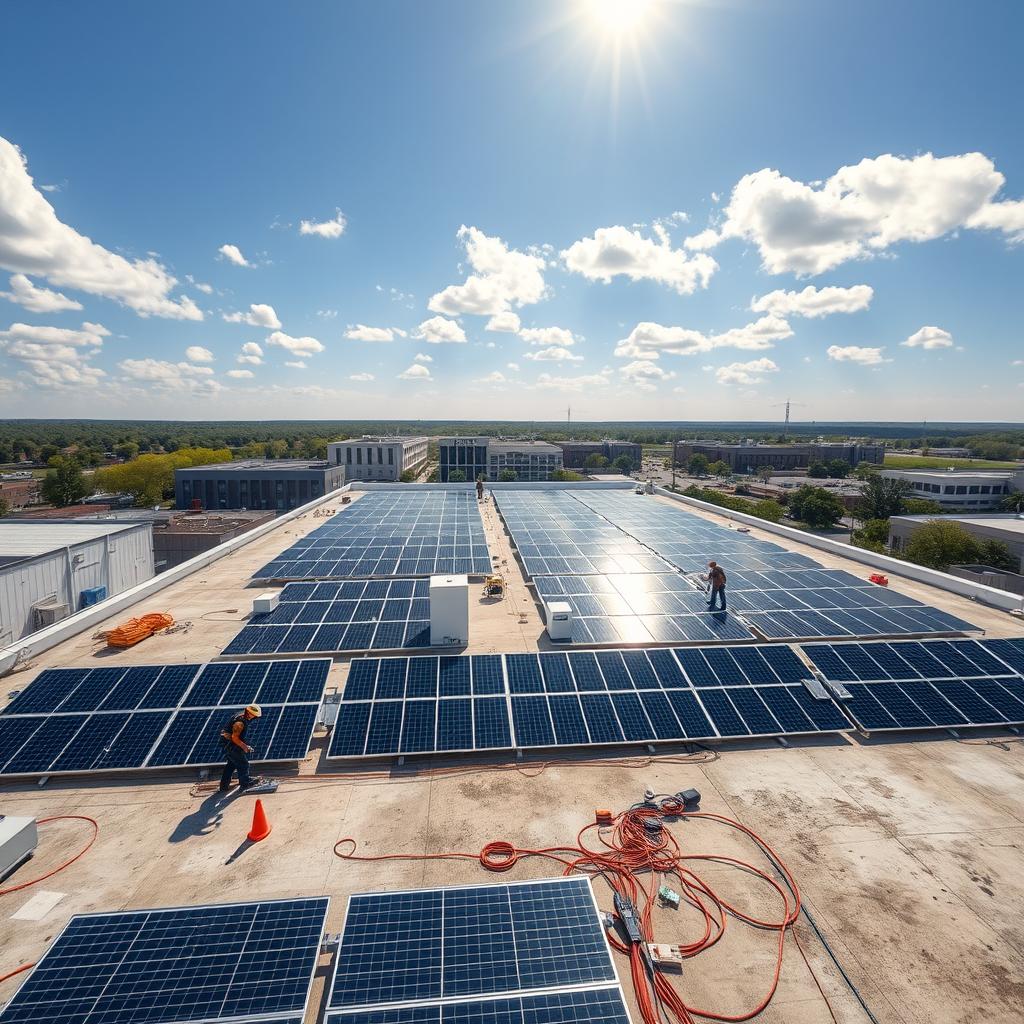
National coverage for solar contractors.
Writing solar contractor programs in all 50 states since 2005.
0+
Solar contractors and installation firms insured nationwide
0+
Years placing contractor insurance programs
0 min
Average quote turnaround for solar contractors
0
States licensed and writing
Solar contractor insurance, in plain English.
Solar contractors typically need general liability, workers' compensation, a solar installation floater (inland marine), commercial auto, and contractor bonds. Firms that design systems or project energy production should also carry professional liability (E&O). Commercial and utility-scale contractors may need umbrella coverage to meet project requirements.
A solar installation floater (also called an inland marine or contractors all-risk policy) covers solar panels, inverters, racking systems, and other equipment against theft, damage, and breakage while in transit, in storage, or during installation — before the system is energized and covered by the property owner's policy. Standard GL and commercial auto don't cover this equipment.
It depends on your GL form. Standard commercial GL may exclude or limit damage to the property your crews are working on — rooftop penetrations, flashings, and improper waterproofing that cause leaks can fall into completed-work exclusions or your-work exclusions. Solar contractor GL is written to address rooftop exposure specifically, including roof membrane damage and post-installation leaks.
Solar contractor E&O covers claims arising from design errors, production shortfall disputes, grid-tie specification mistakes, and other professional service failures. When a homeowner or commercial client claims the solar system produces less than projected — or that the design was incorrect — E&O covers your defense and any resulting settlement or judgment.
Cost depends on the type of installation work (residential rooftop, commercial flat-roof, ground-mount, utility-scale), crew size and payroll, states where you install, panel and equipment values, annual revenue, and loss history. We quote your actual operation in about 15 minutes — never a generic estimate.
With an installation floater in place, yes. Solar panels, inverters, and racking are high-value targets for theft — and they're not covered under GL (which covers third-party liability, not your own equipment) or commercial auto (which covers the vehicle, not the cargo). The installation floater covers theft, vandalism, and accidental damage to your installation materials and equipment.
With proper classification, yes. But rooftop solar installation has a specific fall hazard profile that must be correctly classified. If your workers are classified under generic contractor codes rather than the correct solar or rooftop installation codes, the premium may be wrong and a claim can create a coverage dispute. We classify solar installation crews correctly from the start.
Yes. Contractors Choice Agency is licensed in all 50 states and writes solar contractor programs for firms whether your crews install in California, Texas, Florida, Arizona, or anywhere in the country.
Yes. We work with solar specialty markets that understand commercial flat-roof, carport canopy, ground-mount, and utility-scale solar installation — including the higher GL and umbrella limits that commercial project owners require.
Yes. The installation floater covers your solar equipment on job sites, in transit between sites, and in storage — not just during the installation itself. For solar contractors transporting high-value panels and inverters in trucks, transit coverage is an important part of the floater.
Builders risk covers a specific construction project from start to completion — it's placed for a particular project and covers the building and materials incorporated into it. An installation floater is a rolling policy that covers your solar installation materials and equipment across all your active projects, in transit and in storage. For solar contractors running multiple projects simultaneously, a floater is typically the more cost-effective and comprehensive solution.
Yes — if the shortfall arises from a design error, incorrect energy modeling, or improper specification. If a homeowner or commercial client claims the system produces substantially less than what was projected in the proposal or contract, and the cause is a professional error in the design or specification, E&O covers the defense and settlement. Claims arising purely from weather or resource variability are typically not covered.
Solar contractors typically need state contractor license bonds, and may need performance and payment bonds for commercial and government solar projects. License bond requirements vary by state — California, for example, requires contractor license bonds as a condition of licensing. We issue license bonds quickly and handle performance bonds for larger solar projects.
Typically 15 minutes on a call. For larger commercial programs or utility-scale projects, we may need a day or two to place with the right specialty solar markets, but we move fast and tell you the timeline up front.
With properly classified workers' comp, yes. Electrical injuries are among the most severe in solar installation — arc flash, electrocution from improperly isolated systems, and battery storage electrical hazards all fall within the workers' comp scope. We confirm the policy reflects the electrical hazards of your crews' specific work.
Commercial auto covers the vehicle and third-party liability — not cargo. Solar panels and equipment being transported in your trucks are covered by the installation floater, not commercial auto. We coordinate both policies so your panels are covered during loading, transport, and unloading.
Roof damage caused by your crew's operations — penetration leaks, membrane damage, improper flashing — is a liability claim under your GL policy. With solar contractor GL that addresses rooftop operations, your GL covers the roof repair cost and your defense against the homeowner's claim. Standard GL may have exclusions that limit coverage for this type of damage.
Often yes. Prior claims — roof damage, equipment theft, workers' comp claims — don't automatically disqualify you from solar contractor insurance. We have admitted and E&S markets for solar contractors with prior loss history. The key is presenting the claim history accurately along with what safety or operational changes followed.
Battery storage (BESS) systems create fire and electrical hazards beyond standard solar. GL and installation floater can cover battery storage projects with appropriate endorsements, but the underwriting is more involved. If your firm installs battery storage, we confirm the coverage addresses the specific battery fire and thermal runaway exposure.
Usually yes. A coordinated program closes gaps between GL, workers' comp, installation floater, and auto — and is typically cheaper and cleaner than separate policies from separate carriers, especially when commercial project owners require multiple lines on a single certificate.
Protect Your Solar Contracting Firm with coverage built for installation work.
Whether you need an installation floater today or a full program — GL, workers' comp, floater, E&O, and auto — one call gets you real quotes from specialty solar contractor markets.
No obligation. No spam. Licensed all 50 states.