Workers' Compensation for solar contractors
Injury coverage for solar installation crews — rooftop falls, electrical burns, heat exposure, and battery storage hazards — classified correctly with solar-specific workers' comp codes and fast claims handling.
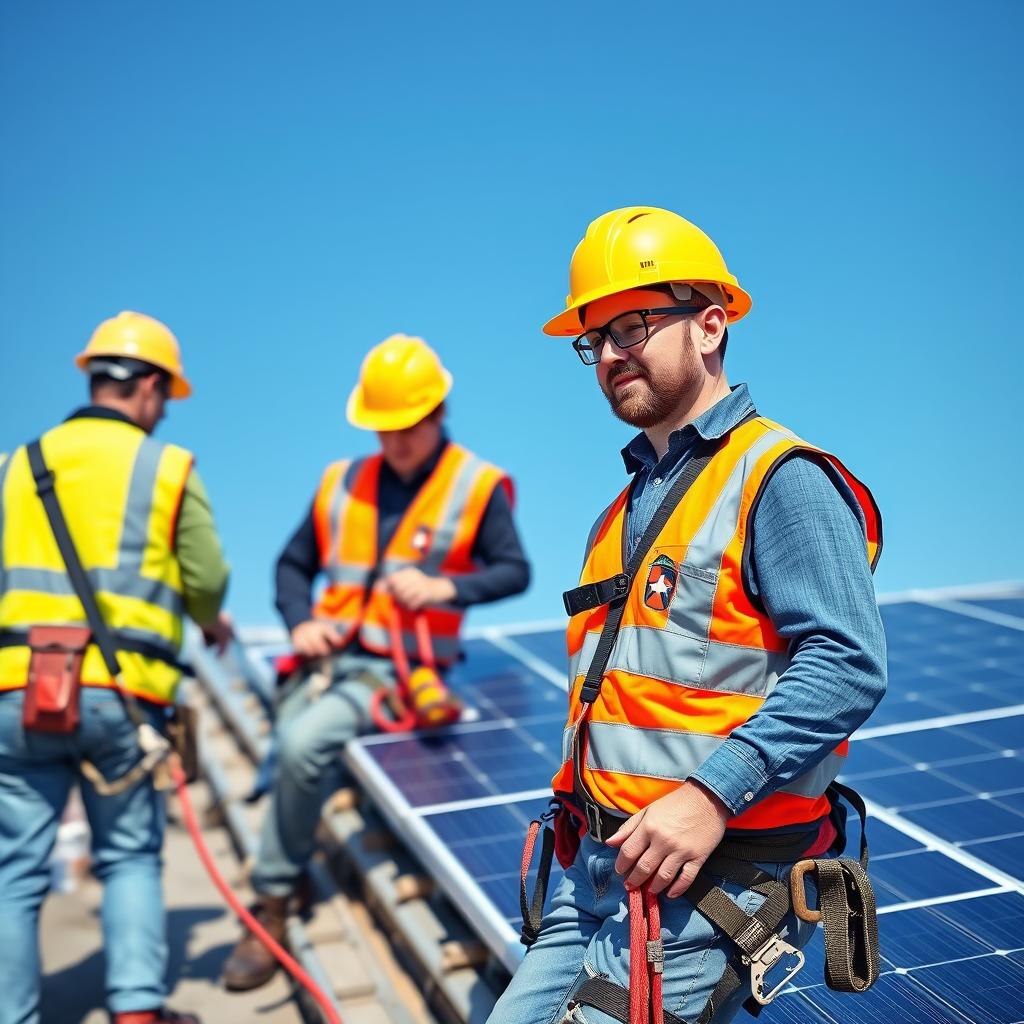
What it covers
- Medical treatment for rooftop falls and fall-arrest injuries
- Electrical burn and arc flash injury coverage for solar installers
- Heat illness and exertion coverage for outdoor installation crews
- Battery storage fire and electrical hazard coverage
- Employers' liability (Part Two) protection
- Disability and lost-wage benefits for injured solar workers
Who it's for
- Solar installation firms with rooftop installation crews
- Commercial solar contractors with large installation teams
- Ground-mount and utility-scale solar contractors with outdoor crews
- Any solar contractor whose workers are misclassified under generic construction codes
Why CCA
- Class codes structured for actual rooftop solar installation work — not generic contractor codes
- Solar installation labor classified correctly to avoid audit surprises at renewal
- Fast claims handling so injured installers get care without dispute
Common questions about workers' compensation
In most states, yes — workers' comp is mandatory for employees. Rooftop solar installation is a high-hazard occupation with fall risk, electrical exposure, and heat illness risk. Correct classification and coverage are essential for your crew and your compliance.
Rooftop solar installation typically falls under specific roofing or electrical contractor codes, depending on the primary nature of the work. Using generic contractor codes can produce incorrect premiums and create classification disputes at audit. We assign codes based on the actual work your crew performs.
Yes — electrical injuries sustained during solar installation, including arc flash and contact with energized conductors, are covered. We make sure the policy reflects the electrical work component of your crew's solar installations.
Yes. Workers' comp covers heat stroke, heat exhaustion, and other occupational illness claims — including heat-related illness for installation crews working on rooftops in high-temperature conditions. For solar contractors operating in hot climates, heat illness is a genuine workers' comp exposure.
Workers' comp policies are audited annually based on actual payroll. The carrier reviews your payroll by classification code to calculate the final premium. Correct classification at policy inception avoids large audit adjustments — and ensures the coverage matches the work being done if a claim arrives.
Cost depends on installation type, crew size, payroll, states, equipment values, and loss history. We quote your actual operation in about 15 minutes — never a generic estimate.
Yes. Contractors Choice Agency is licensed in all 50 states and writes solar contractor programs for firms whether your crews work in California, Texas, Florida, or anywhere in the country.
Typically 15 minutes on a call. Larger commercial programs may take a day or two to place with the right specialty solar markets, but we move fast and set expectations up front.
Often yes. Prior roof damage, theft, or workers' comp claims don't automatically disqualify you. We have markets for solar contractors with challenging history — bring us your situation.
Usually yes. Coordinated programs close gaps between GL, workers' comp, floater, and auto — and are typically cheaper and cleaner than separate policies from separate carriers.
A.M. Best ratings reflect a carrier's financial strength. We place coverage with A-rated carriers so the coverage is there when a roof damage claim, a theft, or a production shortfall E&O claim hits.
Yes. We work with solar specialty markets for all installation types — residential rooftop, commercial flat-roof, carport canopy, ground-mount, and utility-scale solar.
Rooftop solar installation has specific workers' comp class codes that reflect the fall hazard profile of working at height. Generic contractor codes may not capture the solar installation exposure correctly — we classify your crews based on actual job functions.
Installation types, states where you install, crew size and payroll, panel and equipment values, revenue breakdown, current coverage, and 5 years of loss history. More detail means a more accurate quote.
Yes. The installation floater covers panels, inverters, and equipment against theft, vandalism, and accidental damage on job sites, in transit, and in storage — all risks that standard GL and commercial auto don't cover.
With appropriate endorsements, yes. Battery storage creates additional fire and electrical hazards that require coverage beyond standard solar GL. We confirm your program addresses battery storage exposure if your crews install BESS systems.
Solar E&O covers claims arising from design errors, production shortfall disputes, grid-tie specification mistakes, and other professional failures. When a client claims the system underperforms due to your professional error, E&O covers defense and settlement.
Yes. We structure programs so your GL, workers' comp, floater, and auto coordinate across state lines without gaps — including solar crews that travel between states for commercial projects.
Often yes — commercial solar project owners and utilities increasingly require performance and payment bonds on solar EPC and installation contracts. We issue performance bonds for solar contractors through admitted and specialty surety markets.
Pair it with related coverage
Ready to protect your solar contracting firm?
Get a 15-minute quote from specialists who understand solar contractor coverage — rooftop GL, installation floater, workers' comp, E&O, and umbrella.