Solar Contractor Workers' Comp: Rooftop Hazards and Classification
By Josh Cotner
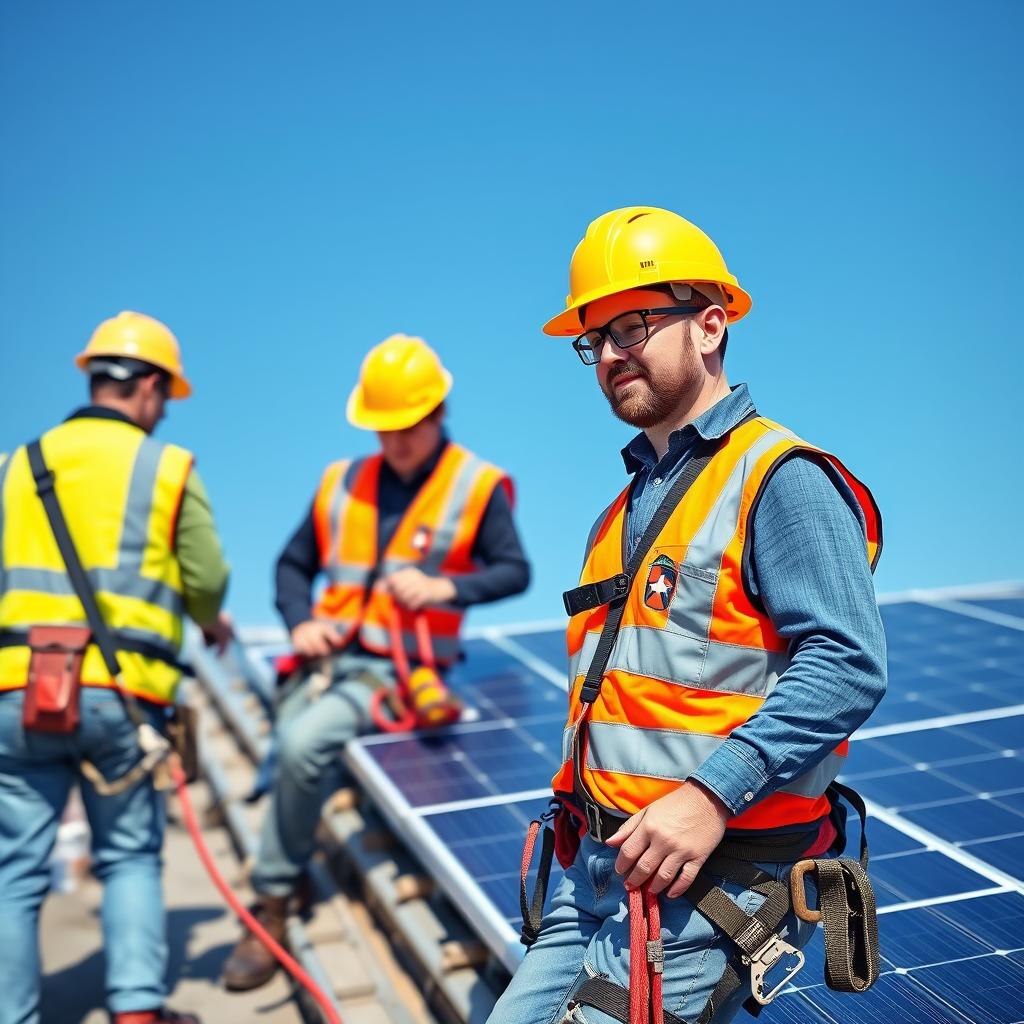
Workers' compensation for solar installation firms is more complex than it looks. Rooftop solar work sits at the intersection of roofing, electrical work, and general construction — each with different hazard classifications and premium implications.
Here's what solar contractors need to know about workers' comp classification, common coverage gaps, and what your policy should reflect about your crew's actual work.
The Hazards That Drive Solar Workers' Comp
Workers' comp classification is built around injury frequency and severity by job type. For solar installation, the primary hazards are:
Rooftop falls — Falls from height are the leading cause of fatal injuries in construction, and rooftop solar installation places crews at height for extended periods during installation. Proper fall protection and correct workers' comp classification both matter.
Electrical injuries — Solar installation involves both AC and DC electrical systems. DC electrical incidents from string circuits, module wiring, and improperly isolated arrays can cause severe burns and electrocution. Battery storage installations add additional electrical hazard from high-capacity battery systems.
Heat illness — Solar installation crews work on rooftops in full sun, often in hot climates. Heat stroke and heat exhaustion are genuine occupational hazards for residential solar crews in Arizona, California, Texas, and Florida during summer months.
Lifting and musculoskeletal injuries — Solar panels are heavy (40-70 lbs per module). Lifting, carrying, and positioning panels on rooftops creates back, shoulder, and knee injury exposure that is consistent and common in high-volume residential solar installation.
Workers' Comp Classification for Solar Installation
Classification codes for workers' comp are state-specific (NCCI codes in most states, state-specific codes in California, New York, and a few others). Solar installation typically falls into one of several classifications depending on the primary work:
Roofing-adjacent codes — Crews primarily engaged in rooftop work — mounting, penetrating, and flashing — may be classified under roofing or related codes. Roofing codes carry high rates reflecting the fall hazard.
Electrical contractor codes — Crews whose primary work is the AC electrical connection, inverter installation, and panel wiring may fall under electrical contractor codes.
Solar-specific codes — Some states have introduced specific solar installation codes as the industry has grown. Where available, solar-specific codes often reflect a rate between roofing and electrical.
The correct classification depends on what your crew actually does — not what's most convenient to classify them under.
Why Misclassification Matters
Underpaying at policy inception — If your crew is classified under a lower-rate code than their work actually warrants, your premium looks lower than it should. At audit time, the carrier reviews your actual payroll by job function and reclassifies — producing a large additional premium bill.
Coverage disputes at claim time — If a rooftop fall claim arrives and the injured worker was classified under a non-rooftop code, the carrier may dispute whether the classification captured the rooftop exposure. Getting classification right at the start prevents this.
Overpaying the wrong code — Conversely, some generic commercial contractor codes overrate solar installation work relative to what solar-specific codes provide. Correct classification can mean paying the right rate — which may be lower for parts of your operation than a generic contractor code.
Heat Illness as an Occupational Risk
California, Arizona, Texas, and Florida all have outdoor heat exposure regulations for contractors, and workers' comp claims for heat illness are common in those markets during summer months.
Heat illness claims are covered under workers' comp when they arise from occupational exposure — including rooftop crews working in high ambient temperatures. For solar contractors operating in hot climates, confirming that your workers' comp reflects the heat illness exposure of rooftop installation is worth doing before summer season.
Battery Storage and Electrical Hazard
The growth of battery storage (BESS) installations alongside solar creates additional electrical hazard that some workers' comp carriers scrutinize. High-capacity battery systems during installation carry arc flash, thermal runaway, and electrocution risk.
If your crews install battery storage regularly, confirm that your workers' comp classification and coverage reflects battery storage installation — not just standard solar panel installation. Some carriers add specific endorsements or higher rates for battery storage installation.
Getting Classification Right From the Start
The best approach is correct classification at policy inception — before a claim reveals a mismatch or an audit produces a large adjustment.
At Contractors Choice Agency, we work with workers' comp carriers that write solar installation risks and assign class codes based on your crew's actual job functions. For solar contractors with mixed crews (some doing rooftop work, some doing ground-mount, some doing electrical finishing), we structure the classification correctly across all work types.
Call 844-967-5247 or get a quote in 15 minutes.
Need this coverage for your solar contracting firm?
Get a real quote in about 15 minutes — we shop A-rated specialty solar contractor markets.